
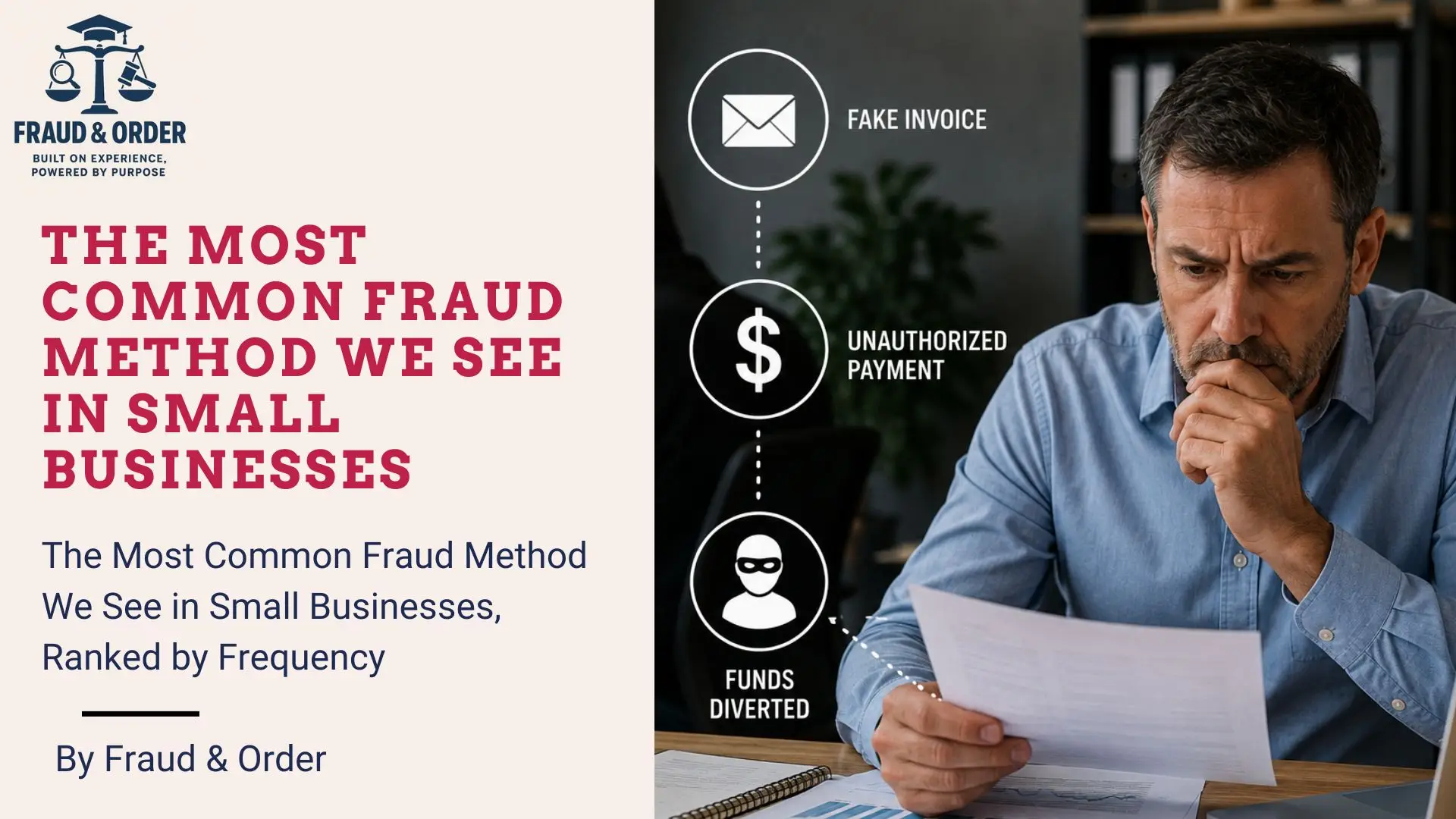
Small businesses lose more to fraud, dollar for dollar, than the giants do. According to the Association of Certified Fraud Examiners (ACFE) 2024 Report to the Nations, organizations with fewer than 100 employees suffered a median loss of $141,000 per case, and the typical organization loses roughly 5 percent of its annual revenue to fraud every year. Worse, the median scheme runs for about 12 months before anyone notices.
If you run a lean operation, that should get your attention. Fewer employees means fewer people to separate duties, review transactions, and catch the anomalies that larger companies flag automatically. That gap is exactly where small business fraud thrives.
So which schemes actually show up most often? Below, we rank the most common small business fraud methods by frequency, based on ACFE case data and what forensic investigators encounter in the field. Knowing the order matters, because it tells you where to point your limited defenses first.
1. Corruption: The Most Common Small Business Fraud Scheme
For organizations under 100 employees, corruption tops the list. ACFE data shows corruption appeared in 44 percent of small-business cases, making it the single most frequent category small companies face. Corruption covers conflicts of interest, bribery, kickbacks, illegal gratuities, and economic extortion, essentially any scheme where an employee uses their influence in a business transaction to serve their own interests.
In a small business, corruption often hides in plain sight. An office manager steers every order to a vendor who happens to be a relative. A buyer accepts kickbacks for approving inflated invoices. Because relationships in small companies are personal and trust runs high, these arrangements can persist for years.
What to do now:
- Require competitive bids for significant purchases
- Rotate vendor relationships and review them annually
- Ask employees to disclose any financial ties to suppliers
2. Billing Schemes: Fraud Through Fake or Inflated Invoices
Billing fraud is consistently one of the most common small business fraud methods, ranking second across organizations in the ACFE study. Here, a fraudster submits false invoices or manipulates the payment system to funnel money out. Think shell company invoices for services never rendered, personal purchases run through the company account, or a fictitious vendor set up solely to collect checks.
Small businesses are especially vulnerable because one person often controls purchasing, approval, and payment. Remove the second set of eyes, and a fake invoice sails straight through.
The fix is separation of duties. The person who approves a vendor should not be the same person who cuts the check. If you are too small to fully separate those roles, owner review of the vendor list and monthly statements becomes non-negotiable. Our breakdown of the $642K contractor theft in the Jaragosky case shows how quickly a billing and payment scheme can escalate when no one is watching the books.
3. Check and Payment Tampering: A Small-Business Specialty
Check tampering is roughly three times more common in small businesses than in large ones, and it is one of the schemes forensic examiners see most in companies with informal controls. It happens when an employee alters, forges, or redirects company payments, whether by forging a signature, changing a payee, or issuing checks to themselves.
Because so much check tampering starts in the accounting function, the person recording the books is frequently the same person able to conceal the theft. That overlap is why these schemes can run undetected for years. Reconciling bank statements independently, ideally by someone who does not handle checks, is one of the highest-return controls a small business can adopt.
4. Expense Reimbursement and Payroll Fraud
Rounding out the most common small business fraud methods are expense reimbursement and payroll schemes. Expense fraud includes padded mileage, fictitious receipts, personal meals billed as business, or the same expense claimed twice. Payroll fraud shows up as ghost employees, inflated hours, or unauthorized pay changes.
These schemes are smaller per transaction, which is exactly why they slip through. A few extra dollars on an expense report or a slightly padded timesheet rarely triggers alarm, but repeated over months the losses add up. Payroll fraud in particular tends to have one of the longest times to detection of any scheme.
Quick controls that help:
- Require itemized receipts and manager sign-off on all reimbursements
- Reconcile payroll records against your actual employee roster regularly
- Watch for reimbursement requests that always round to convenient numbers
Why Detection Matters More Than You Think
Here is the encouraging part: fraud is catchable, and the data tells you how. Across the ACFE study, 43 percent of frauds were uncovered through tips, more than three times any other detection method. Organizations with anonymous reporting hotlines detected fraud faster and cut their losses by roughly half.
For a small business, you may not need an expensive hotline vendor. A simple, trusted, confidential channel for employees to report concerns changes the math. Most fraudsters display behavioral red flags well before they are caught, and coworkers often notice long before the numbers do. If you want to see what those warning signs look like in real cases, our field notes on the red flags that appear in nearly every fraud case break them down, and our review of how long embezzlement went undetected across 50 cases shows why speed of detection is everything.
Beyond tips, layer in the basics that shrink opportunity: separation of duties, mandatory vacations for finance staff, surprise audits, and independent bank reconciliations. None of these require enterprise budgets. They require intention.
Protect Your Business Before the Next Scheme Starts
The most common small business fraud methods follow a predictable pattern: corruption first, then billing schemes, check tampering, and expense or payroll manipulation. They exploit the same weakness every time, which is a lack of oversight in a business where trust substitutes for controls. You cannot eliminate trust, and you should not try. You can add the checks that make trust safe.
Start this week. Pick one control from this article, separation of duties, an independent reconciliation, or a reporting channel, and put it in place. Then build from there. If you suspect a scheme is already underway, do not confront it alone or tip off the perpetrator, because that can destroy evidence and expose you to liability. Bring in professionals who conduct forensic examinations built to hold up in front of regulators, boards, and prosecutors.
At Fraud & Order, that is what we do. We trace the money, document the scheme, and deliver evidence-based findings you can act on. If something feels off in your books, reach out for a confidential conversation before small business fraud costs you more than it already has.
Frequently Asked Questions
1. What is the most common type of fraud in small businesses?
For organizations with fewer than 100 employees, corruption is the most frequent scheme, appearing in about 44 percent of cases according to ACFE data. It includes kickbacks, bribery, and conflicts of interest. Billing schemes and check tampering follow closely behind.
2. Why are small businesses more vulnerable to fraud than large companies?
Small businesses typically have fewer employees, which makes separation of duties difficult, and they often rely on personal trust in place of formal controls. That combination gives a dishonest insider more opportunity and less oversight. The ACFE consistently finds that weak internal controls contribute to more than half of all fraud cases.
3. How long does small business fraud usually go undetected?
The median occupational fraud scheme lasts around 12 months before discovery, though some categories like payroll and check tampering run much longer. The longer a scheme continues, the larger the loss grows. Early detection dramatically reduces the financial damage.
4. What is the single best way to catch fraud early?
Tips are the number one detection method by a wide margin, uncovering 43 percent of cases. Establishing a confidential way for employees to report concerns, paired with regular independent reviews, gives you the best odds of catching a scheme early. Awareness and reporting beat expensive software for most small businesses.
5. Should I confront an employee I suspect of fraud?
No. Confronting a suspect prematurely can destroy evidence, trigger legal exposure, and let the perpetrator cover their tracks. The safer path is to preserve records quietly and engage a qualified forensic investigator or attorney. A proper examination protects both your case and your business.
6. When should a small business hire a fraud investigator?
Bring in professional help when you notice unexplained financial discrepancies, missing documentation, or credible red flags you cannot resolve internally. A forensic examination produces documented, defensible findings suitable for insurance claims, litigation, or law enforcement. Acting early preserves evidence and improves your chances of recovery.
References
Association of Certified Fraud Examiners. (2024). Occupational Fraud 2024: A Report to the Nations. https://legacy.acfe.com/report-to-the-nations/2024/
Association of Certified Fraud Examiners. (2024). Occupational Fraud 2024: A Report to the Nations (Full PDF). https://www.acfe.com/-/media/files/acfe/pdfs/rttn/2024/2024-report-to-the-nations.pdf
Federal Bureau of Investigation. (2024). White-Collar Crime. https://www.fbi.gov/investigate/white-collar-crime
Federal Trade Commission. (2025). Protecting Small Businesses. https://www.ftc.gov/business-guidance/small-businesses
U.S. Small Business Administration. (2024). Prevent Fraud and Scams. https://www.sba.gov/business-guide/manage-your-business/prevent-fraud-scams
American Institute of Certified Public Accountants. (2024). Forensic and Valuation Services. https://www.aicpa-cima.com/topic/forensic-valuation-services
Institute of Internal Auditors. (2024). Fraud and Internal Audit. https://www.theiia.org/
U.S. Department of Justice. (2024). Fraud Section. https://www.justice.gov/criminal/criminal-fraud
Disclaimer: This article is provided for informational and educational purposes only and does not constitute legal, financial, or other professional advice, nor does it create any client relationship. Every situation is unique, so you should consult a qualified attorney, accountant, or certified fraud examiner before acting on any information here. For questions about FraudOrder services, visit https://fraudorder.co