
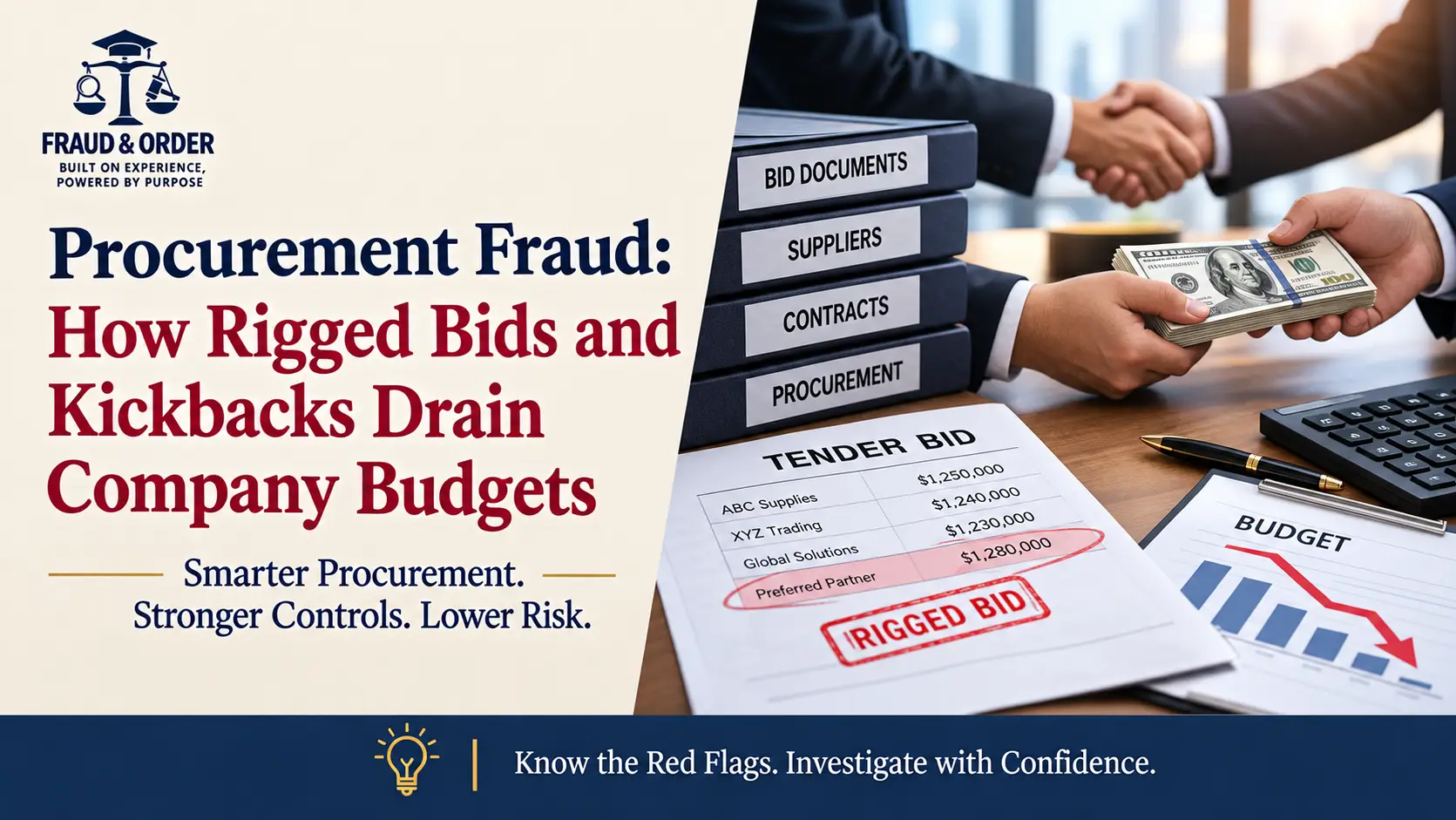
Every purchase order your company signs is a small act of trust. You trust that the bid was fair, the vendor is real, and the price reflects genuine competition. Procurement fraud is the quiet betrayal of that trust, and it is one of the costliest schemes an organization can face. According to the Association of Certified Fraud Examiners (ACFE) 2024 Report to the Nations, corruption, which includes bid rigging, kickbacks, and bribery, appeared in nearly half of all occupational fraud cases (48%) and carried a median loss of around $200,000 per case. Meanwhile, the 2026 AFP Payments Fraud and Control Survey found that 76% of US organizations faced attempted or actual payments fraud in 2025.
The uncomfortable truth is that procurement fraud usually comes from inside, or from a trusted vendor working with someone inside. This guide breaks down how it works, the red flags to watch, and the controls that shut it down.
What Procurement Fraud Actually Looks Like
Procurement fraud is the deliberate manipulation of the buying process to move money or goods dishonestly. It can be committed by an employee, a vendor, or the two colluding. Because it hides inside legitimate-looking transactions, it is often harder to spot than outright theft.
The most common schemes include:
- Bid rigging. Vendors coordinate so a chosen supplier wins, or an insider writes specifications only one vendor can meet. The result is inflated prices and no real competition.
- Kickbacks. A supplier secretly pays an employee to steer contracts their way. The employee benefits personally while the company overpays.
- Fake or ghost vendors. A fictitious supplier is created to divert payments to an insider’s own account.
- Invoice fraud. Invoices are inflated, duplicated, or issued for goods and services never delivered.
- Conflicts of interest. A buyer awards business to a friend, family member, or company they secretly own, bypassing fair evaluation.
These schemes often overlap. A single rigged contract can involve a kickback, a manipulated specification, and an inflated invoice all at once.
Why Procurement Is So Vulnerable
Procurement sits on top of large budgets, complex approval chains, and relationships with outside parties. That combination creates opportunity. The ACFE found that more than half of occupational fraud cases traced back to weak internal controls or the override of existing ones, and procurement is a prime example of where those gaps appear.
The core weakness is concentration of control. When one person can request a purchase, select the vendor, approve the invoice, and release payment, there is no independent check on their decisions. This is especially common in mid-market finance teams, where a single individual may handle the whole cycle without a dedicated internal auditor watching.
Corruption also tends to climb with authority. The ACFE reports that fraud committed by owners and executives, while less frequent, causes far larger losses, because senior people can override the very controls designed to stop them. Emergency or rushed purchasing raises the risk further, as compressed timelines invite shortcuts around normal safeguards.
If your organization is smaller and wondering whether it is really a target, our guide on why small businesses are more vulnerable to fraud than they think is worth a read.
The Red Flags That Signal Procurement Fraud
Procurement fraud leaves traces in bidding patterns, vendor records, and employee behavior. No single sign proves wrongdoing, but clusters of them deserve investigation.
Watch for these warning signs:
- The same supplier wins repeatedly, especially in a suspicious rotation with a small group of bidders
- Bids that come in unusually close together, or a late low bid suggesting inside knowledge
- Vendor addresses or bank accounts that match an employee’s
- Specifications written so narrowly that only one supplier can qualify
- Frequent use of sole-source or no-bid contracts without documented justification
- Invoices that are inflated, duplicated, or lack supporting delivery records
- An employee who resists rotation, refuses to share vendor management, or lives noticeably beyond their means
That last point matters. The ACFE found that around 84% of fraudsters display at least one behavioral red flag before being caught, with living beyond one’s means the most common. Behavioral and data signals together paint the clearest picture.
A Practical Playbook to Prevent Procurement Fraud
You do not need a large audit department to defend against procurement fraud. You need structure and consistency. Here are steps you can put in place right away.
- Enforce segregation of duties. Make sure the person who requests a purchase is not the same person who approves the vendor, receives the goods, and pays the invoice. Splitting these roles across even two people disrupts most single-actor schemes.
- Require a three-way match. Match every invoice against the purchase order and the receiving record before payment. This simple control catches inflated and fake invoices fast.
- Verify vendor bank changes. Any change to a vendor’s payment details should trigger a written, independent verification step, ideally a callback to a known contact.
- Broaden and vet your bidder pool. More genuine competition makes bid rigging harder. Conduct due diligence on new vendors, and screen for hidden connections to staff.
- Audit procurement regularly. Run periodic and surprise reviews of contracts, pricing trends, and sole-source justifications. Surprise audits consistently correlate with lower losses.
- Build an anonymous reporting channel. Tips are the leading way fraud is caught, responsible for about 43% of detections. A hotline gives employees and vendors a safe way to flag suspicions.
Data analytics can strengthen every one of these steps, flagging duplicate vendor accounts, statistical price outliers, and unusual bidding patterns across your entire purchasing history.
When to Call in a Professional
Internal controls prevent a great deal, but discovering an active scheme is a different situation. If you find evidence of collusion, a kickback arrangement, or a fake vendor, resist the urge to confront the person immediately. A premature confrontation can destroy evidence and tip off the fraudster.
Professional fraud examiners and forensic accountants preserve evidence properly, quantify losses defensibly, and build documentation that stands up with regulators, boards, and courts. To understand what that process involves, see our step-by-step overview of what happens during a forensic accounting investigation. And if recovery is the goal, our guide on recovering money from an embezzling employee explains why the first 48 to 72 hours matter so much.
Protect Your Budget Before It Bleeds Out
Procurement fraud thrives on concentrated control and unquestioned trust. The most powerful defenses, segregation of duties, three-way matching, vendor verification, and real competition, cost little beyond discipline and attention. Every rigged bid you catch early is money that stays in your budget instead of a fraudster’s pocket.
If you suspect rigged bids, kickbacks, or fake vendors inside your organization, do not investigate alone. The team at Fraud & Order brings decades of experience uncovering financial crime and building airtight documentation. Reach out through the confidential intake at https://fraudorder.co/ to protect your organization with integrity and clarity.
Frequently Asked Questions
What is procurement fraud?
Procurement fraud is the deliberate manipulation of the buying process to move money or goods dishonestly. It includes bid rigging, kickbacks, fake vendors, inflated invoices, and conflicts of interest, and it can be committed by employees, vendors, or the two working together.
How common is procurement fraud?
Corruption schemes, which include bid rigging and kickbacks, appeared in 48% of the occupational fraud cases in the ACFE’s 2024 study. Broader survey data shows that 76% of US organizations faced attempted or actual payments fraud in 2025, so the risk is widespread.
What is bid rigging?
Bid rigging is when suppliers coordinate their bids, or an insider shapes the tender, so a predetermined vendor wins. It defeats genuine competition and usually leads the organization to overpay for goods or services.
How do kickbacks work in procurement?
A kickback is a secret payment or benefit a supplier gives an employee in exchange for steering contracts their way. The employee gains personally while the company pays inflated prices, making it a form of corruption under most fraud frameworks.
What is the single most effective control against procurement fraud?
Segregation of duties. When no one person can request, approve, receive, and pay for a purchase, most schemes fall apart. Pairing that with a three-way invoice match and vendor verification covers the largest share of risk.
When should we bring in a fraud investigator?
As soon as you have credible evidence of a scheme, and before confronting anyone involved. A qualified fraud examiner or forensic accountant preserves evidence and quantifies losses so you protect your options for recovery and prosecution.
References
Association of Certified Fraud Examiners. (2024). Occupational Fraud 2024: A Report to the Nations. https://www.acfe.com/-/media/files/acfe/pdfs/rttn/2024/2024-report-to-the-nations.pdf
Federal Bureau of Investigation. (2024). White-Collar Crime. https://www.fbi.gov/investigate/white-collar-crime
U.S. Department of Justice. (2025). Antitrust Division: Procurement Collusion Strike Force. https://www.justice.gov/atr/procurement-collusion-strike-force
OECD. (2025). Guidelines for Fighting Bid Rigging in Public Procurement. https://www.oecd.org/en/publications/2025/09/oecd-guidelines-for-fighting-bid-rigging-in-public-procurement-2025-update_127880ea.html
Association for Financial Professionals. (2026). AFP Payments Fraud and Control Survey. https://www.afponline.org/training-resources/resources/survey-research-economic-data/Details/payments-fraud
Institute of Internal Auditors. (2025). Fraud and Internal Audit. https://www.theiia.org/en/content/articles/global-knowledge-brief/2023/fraud-and-internal-audit/
AICPA & CIMA. (2024). Forensic and Valuation Services. https://www.aicpa-cima.com/topic/forensic-valuation-services
Transparency International. (2026). Corruption Perceptions Index 2025. https://www.transparency.org/en/cpi/2025
U.S. Government Accountability Office. (2024). Fraud Risk Management. https://www.gao.gov/fraud-risk-management
Disclaimer
This article is provided for informational and educational purposes only and does not constitute legal, financial, or professional advice. Reading it does not create any attorney-client, accountant-client, or investigator-client relationship. Every situation is unique, so consult a qualified attorney, forensic accountant, or certified fraud examiner before acting on your specific circumstances. For questions about FraudOrder services, visit https://fraudorder.co/