
Fraud types

Healthcare fraud

How healthcare fraud works

Healthcare fraud is billing a health plan, Medicare or Medicaid for care that was never given, was not needed, or was dressed up to look more expensive than it was. Patients pay for it in higher premiums, and sometimes in treatment they did not need.

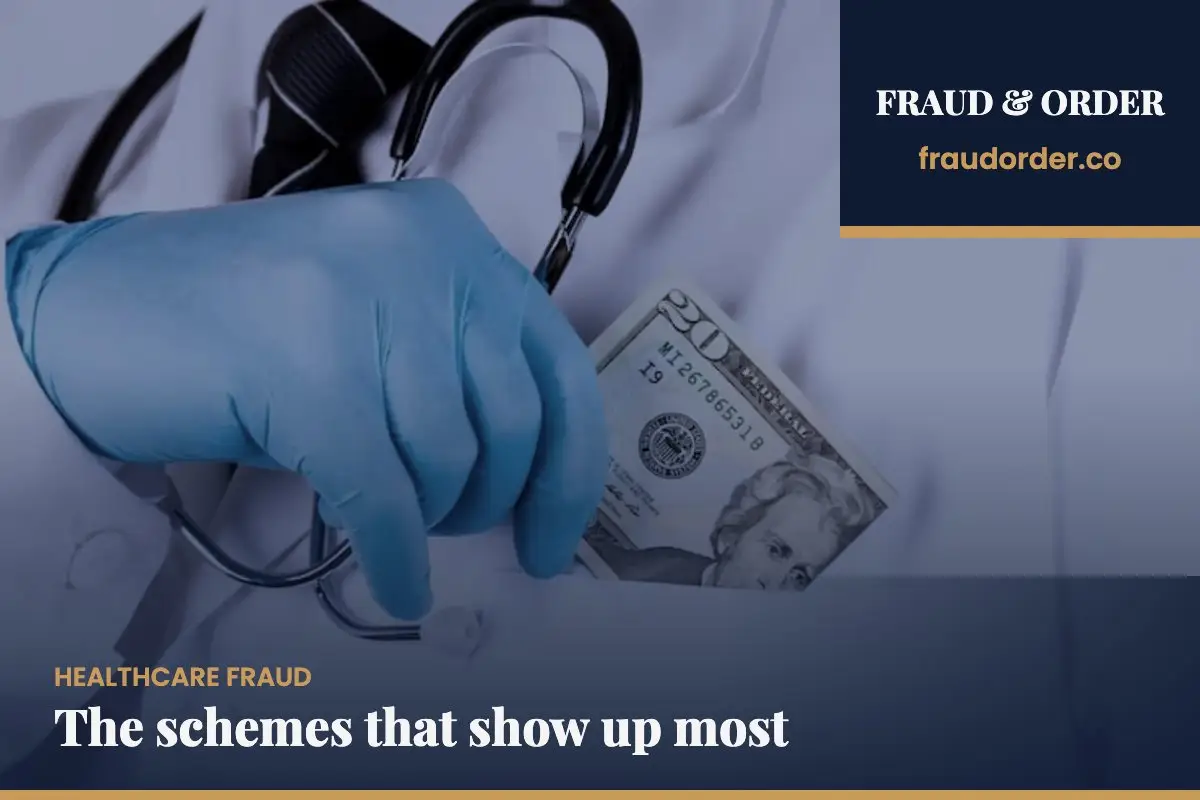
The schemes that show up most

  • Phantom billing: charging for visits, tests or equipment that never happened.
  • Upcoding: billing a simple visit as a complex one to get paid more.
  • Unbundling: splitting one procedure into several charges.
  • Kickbacks: paying or taking money for patient referrals.
  • Unnecessary care: ordering tests and procedures a patient does not need.
  • Identity theft: using a stolen Medicare or insurance number to bill for care.
The schemes that show up most | Healthcare fraud | Fraud & Order

How it gets caught

Most cases start with a pattern in the billing data that does not fit: a clinic billing more hours than exist in a day, or one doctor ordering far more of a test than everyone else. Others start with an employee who sees it from the inside and reports it.

From there, agencies like HHS-OIG and the DOJ pull records, interview patients and staff, and follow the money.

If you spot it, here is what to do | Healthcare fraud | Fraud & Order

If you spot it, here is what to do

  1. Check your statements. Compare every Explanation of Benefits against the care you actually got.
  2. Keep copies. Save bills, statements and any messages before you raise it.
  3. Report it. HHS-OIG takes tips at 1-800-HHS-TIPS (1-800-447-8477). Medicare questions go to 1-800-MEDICARE.
  4. Get help. The Fraud & Order Foundation can walk you through reporting and keeping your evidence safe.

From the Case Files

Cases Barry and Titus worked themselves, with where each one stands. See every Case File.

Yield wealth fraud

Paul Regan Indicted in $60 Million Investor Fraud Scheme

Federal prosecutors charged Paul Regan with taking more than $60 million from over 300 investors through Next Level Holdings and Yield Wealth Ltd. Investors lost more than $50 million.

Next Level Holdings Investment Fraud

$45 Million Ponzi Scheme Through Next Level Holdings

Federal prosecutors charged Paul Regan with selling about 300 “protected” notes through Next Level Holdings, taking in more than $45 million and paying old investors with new investors’ money.

Norada Capital Management Fraud

$62.5M Investor Fraud Made by Marco Giovanni Santarelli

Federal authorities charged Marco Santarelli with orchestrating a $62.5 million Ponzi scheme through Norada Capital Management.
Time Is Evidence. Evidence Is Justice.

Every healthcare Fraud File breaks down how the scheme worked, who caught it and what it cost. Read the healthcare Fraud Files.

Phantom billing, upcoding, unbundling, kickbacks for referrals, unnecessary tests and procedures, and billing with stolen patient identities.
Common signs include billing for services not provided, performing unnecessary tests or procedures, receiving kickbacks for patient referrals, altering medical records to justify billing, billing separately for bundled services (unbundling), and submitting duplicate claims.
Federal law, including the False Claims Act, and many state laws protect employees who report fraud from retaliation. The details depend on your situation, so talk to a lawyer before you act. The Fraud & Order Foundation can point you to resources.
Questions people ask | Healthcare fraud | Fraud & Order

Lost money to healthcare fraud?